

For many students, cooking is just another class requirement. But for FACS teacher Dana Jenkins at Rolla High School and Culinary Arts instructor Chef Carmel Dare at the Rolla Technical Institute, it’s much more than recipes and kitchen safety. It’s about connection, to family, to tradition, and to a lifelong passion that transforms students’ futures.
“When I got to high school, I took a World Foods class and absolutely loved it,” Jenkins said. “I loved the teacher [Mrs. Zink], and I thought, ‘I would love to just teach this every day.'”
That moment changed everything. What began as a love for home-cooked meals turned into a career devoted to teaching students the life skills that often get overlooked: how to cook, budget, and care for themselves.
But the journey wasn’t a straight line. Jenkins originally planned to become a veterinarian.
“I loved animals and being outside,” she said. “But it was too much math and science for me.” After talking with her family, she decided to explore teaching, even though it wasn’t part of her plan. A scholarship opportunity led her to education courses in college, where she found her calling. “When I did my observations in the junior high and high school FACS classroom, I realized, ‘This is it,'” Jenkins said.
From Family Recipes to Professional Kitchens
Just down the road at RTI, Dare’s path to teaching took a different turn. She started as an accounting major fresh out of high school, but quickly realized the numbers weren’t adding up to her passion.
“I met this silly boy, who is now Dr. Kyle, superintendent of schools,” Dare said. “We started having a family, and I was like this just isn’t for me.”
Dare also found her answer in Family and Consumer Sciences.
“It was everything that I remember great about high school that I loved about my home economics teacher,” Dare said.
But Dare’s love for cooking started even earlier, out of necessity.
“My mother, who knows this, is not a good cook,” she said. “So I learned how to do things for my dad, and I’ve just always loved cooking for people.”
That passion led her to launch a catering business in 2012, starting with baking for local restaurants before expanding. When her husband moved to Rolla and the RTI position opened up, everything clicked.
“It was all of the things that I always wanted to do all came together in one,” she said.
Building More Than Just Skills
Jenkins’ inspiration wasn’t just found in the classroom, but in people. She credits her own high school FACS teacher as a major influence. “[Mrs. Zink] was amazing; she left a huge legacy here,” Jenkins said. “The way she interacted with kids and the content she taught had a huge impact on me.”
While earning her degree at Mizzou, Jenkins took a hotel and restaurant management course that left a lasting impression.
“It was a lot of pressure because the instructor was a professional chef,” she said. “But it made me think, kids need to know this stuff when they’re younger, not just when they’re adults living on their own.”
Dare takes that philosophy and runs with it. Her classes blend technical skills with something harder to teach: character.
“My proudest moments are always my students, 100%,” she said.
Performance goals line the wall of her classroom, reminding students that success isn’t just about knife skills and temperatures.
“I was a school counselor for a time, and my big thing with all of my students was, I love what you’re doing now, but then what?” Dare said. “After you walk across that stage, then what?”
The answers come back to her from across the country. She has former students working as culinary specialists in the military, at high-end country clubs in Dallas, and in restaurants in New York.
“What we can offer them here is a springboard to something that they truly love,” she said.
About 60% of her students go on to pursue culinary education, though that number shifts from year to year.
“When they all walk in the door, they all think they’re going to be Gordon Ramsay,” Dare said. “But by the time they leave me, they have real credentials and real employability.”
Overcoming the Obstacles
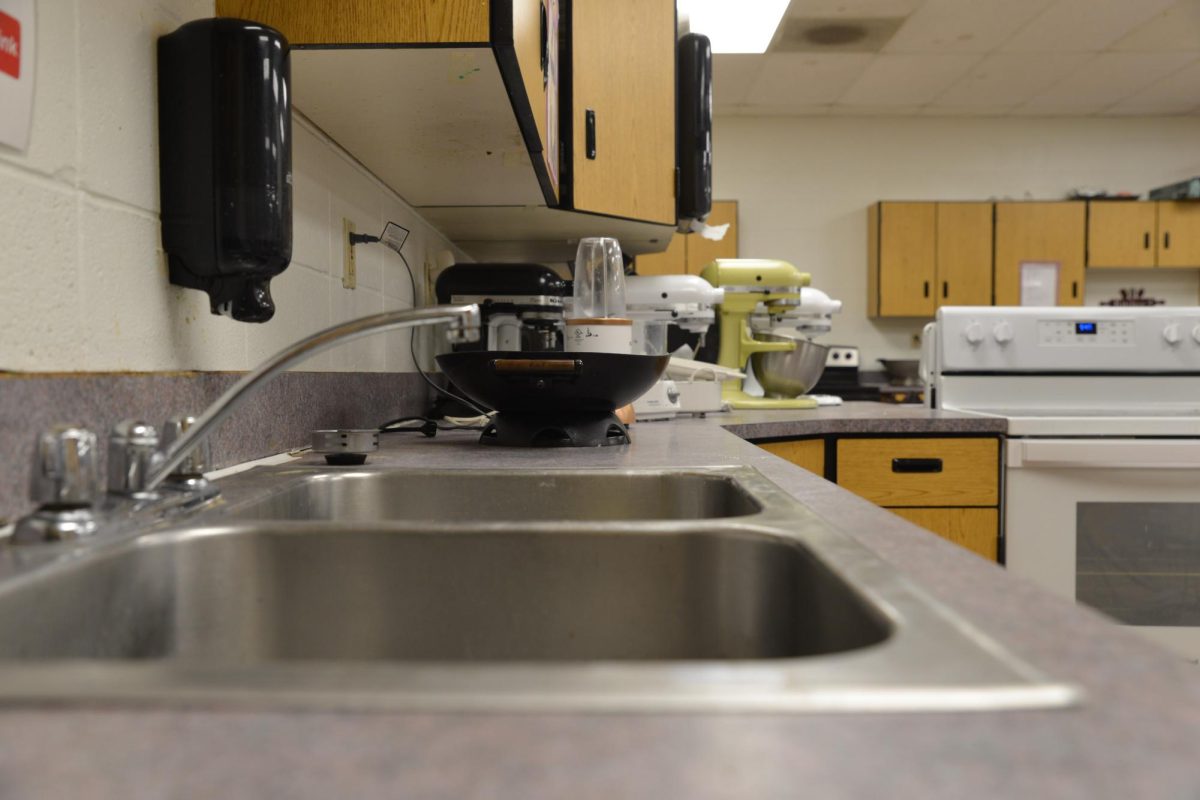
Now at Rolla High School, Jenkins faces challenges familiar to many teachers: large class sizes, limited kitchen space, and aging equipment.
“Class size for the amount of cooking space is a big challenge,” she said. “To overcome that, we do multiple cooking days and split the class in half.”
Dare deals with similar constraints.
“My classes are always full, so my kitchen is not very big,” she said. “When you got 20 kids walking around with knives and all of these things, you have to really be cognizant of what’s going on.”
Despite these hurdles, Jenkins’ classes remain some of the most popular in the school, especially World Foods, which fills up fast every year. She says the ideal class size would be 16 students, but that’s a tough goal to reach.
“There’s just no space on my schedule,” she said. “The only way is to hire another teacher to relieve some of the other classes I teach.”
At RTI, Dare adapts by moving operations beyond the cramped kitchen. The chaos is controlled, the flow intentional.
“We do a lot of things out here,” she said, gesturing to the classroom space.
Teaching What Matters Most
Both teachers know their impact extends beyond cooking techniques. Dare pairs first-year students with second-years, creating a culture where knowledge and respect pass naturally from one class to the next.
“Those first years respect those second years, because those second years have a level of knowledge that the first years just don’t have yet,” she said.
Students earn their way up to different colored uniforms, a visible marker of their growth. On Wednesdays, the coffee shop runs, and other lab days bring challenges like the recent Wing Palooza, where student teams created their own wing recipes for public voting.
The emotional growth matters as much as the technical skills.
“I think a lot of times I have some issues with some kids. They get emotionally upset when things don’t go their way,” Dare said.
She can often trace that anxiety back to food insecurity at home, where messing up a meal has real consequences.
“I would rather you screw up here with me than in your boss’s kitchen, where you’re really losing money,” she tells them. “Sometimes you just gotta roll with the punches, and sometimes you just gotta get creative.”
That lesson extends to her own teaching. Dare admits she came in “like a wrecking ball” when she first started, but she’s learned to soften her approach.
“Everybody’s different, and everybody handles things differently,” she said. “You don’t have to tell people you work hard, they’ll know it.”
Food as Connection
For both teachers, food represents something deeper than sustenance. Dare’s signature dish, shepherd’s pie, tells the story. She created it when her kids were young, layering hamburger, gravy, green beans, corn, mashed potatoes, and cheese into something that could be made ahead and thrown in the oven on busy nights like Halloween.
“Now my kids are 28 and 30, and when they come home, that’s one of the things they ask me to make,” she said.
It’s nothing fancy, just meat, potatoes, and vegetables. But it’s become a bridge between generations, just like the skills she teaches.
“Cooking for somebody is about more than just feeding them,” Dare said. “It’s about connecting with their soul. You’re feeding them emotionally, not just physically.”
Jenkins understands that connection too. Just as her grandmothers once inspired her love of cooking, she now inspires a new generation of students to find joy in what they create.
Looking Ahead
Jenkins stays focused on what matters: helping students discover skills that will last a lifetime. As the FACS program continues to grow, she’s optimistic about what lies ahead.
“I’m most excited about potentially having a bigger area and more funding opportunities in the future,” she said.
Dare’s hopes for her students reach beyond the kitchen.
“I hope that they come out just having a work ethic that’s above everyone around them,” she said. “That they’re hard workers, that they will put their head down and get to work and do what needs to be done.”
But she wants more than just productivity.
“I just want them to be happy people and to be productive, and I hope they live their best lives,” Dare said.
In Rolla’s kitchens, two teachers are doing more than teaching students how to cook. They’re building confidence, work ethic, and connections that last long after the final bell rings. They’re turning passion into purpose, one student at a time. For Jenkins and Dare, cooking isn’t just about what happens in the kitchen. It’s about passing down something meaningful, creating a legacy that feeds both body and soul.