

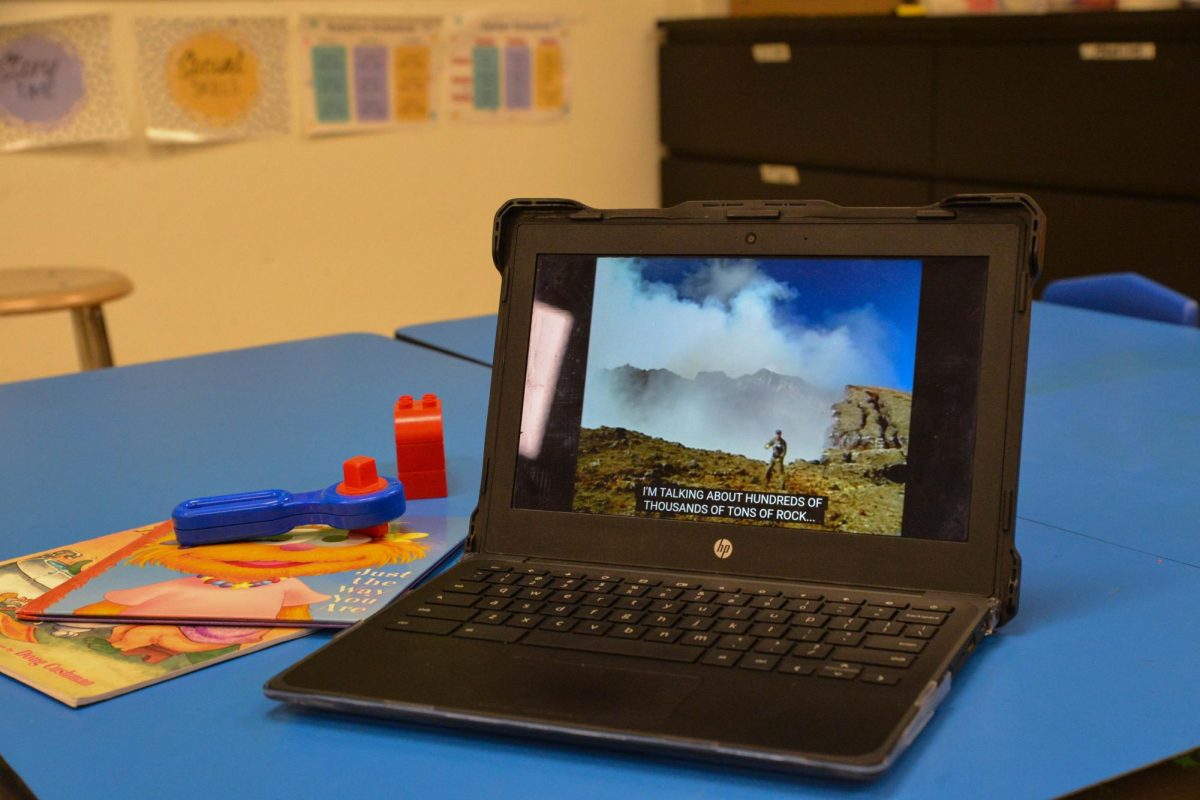
Technology in schools has been a divisive subject since its inception. Missouri has recently been leading the effort in the push back against school tech use—particularly in K-5 education—through legislation like House Bill (HB) 2230 that is set to limit computer use and reintroduce skills like cursive writing, reading fluency, and long-term comprehension.
Sam Rowe is a senior at Rolla High School who works first hour with third graders for the RHS A+ Program, where students can tutor at a school or in a classroom. Rowe was a student when chromebooks were first introduced; now as a cadet teacher for kids, he has been able to observe the subtle shift towards electronics from a first hand perspective.
“I’ve been [cadet teaching] for two months now—whenever second semester started up again. I’ve noticed they use it a lot more than we did whenever we were that age…I want to say probably three or four days a week. And from 8 to 8:45 I’ll see them; most of the time, they’ll be on [tech] the entire period that I’m there… It’s just way more than we had used it whenever we were little, because I remember we had the iPads. They’re just using Chromebooks,” Rowe said.
Screentime isn’t the only major concern for schools; reliance on electronic devices poses issues for students and teachers alike when the curriculum is built around tech use.
“It’s easier for everybody…It’s 2026, everything’s gonna be digital. But I do feel like [curriculum] is very reliant on the Chromebooks, because I’ve noticed a couple times they don’t have Chromebooks or the internet is down. You just can’t do anything,” Rowe said.
Jack Greenway, a senior and A+ student cadet teacher for third graders at St. Patrick Catholic School, has had a very different experience with his students’ technology use.
“Maybe [they use chromebooks] like one or two times a month. They don’t use it very much unless it’s a testing week…they had them out today, but I haven’t seen them use them for multiple weeks before that,” Greenway said on March 5.
Though current legislation would address overuse of tech in classrooms, restrictions have not been put in place to diminish reliance on technology in K-5 schools.
“When you’re fully relying on digital everything, it’s really hard for you to think for yourself. At least, that’s the way that I think. I don’t really want to have that super bread-and-butter outlook on everything, but, I mean, it’s true…You should be able to problem-solve and not rely on that,” Greenway said.
Madison Hodges is a junior at the high school and student in the RTC Early Childhood and Teaching course, where she visits many different schools in the district.
“I wouldn’t really want [young children] on technology…I mean, it’s good for them because we use technology in the higher grades, but when you’re that young, you don’t really need to be learning on that. They need to be learning basic stuff that will actually teach them something, and not how to use an iPad or how to use a Chromebook,” Hodges said.
Many students believe that bills like HB 2230 would be extremely beneficial for students, especially at younger ages.
“I do feel like it’s… [a] really big positive, mostly because…I just want them to be able to use their own brain and learn a lot more than just what the computer or iPad feeds them, you know. Because, to me, the way that I see it is that whenever you have that device in front of you, it creates kind of a codependency, and whenever you’re without it, you feel lost,” Rowe said.