

High school is filled with many opportunities, clubs, extracurriculars, and sports. With so many ways to be involved, it can start to become all-consuming. The tunnel vision these activities create can make it difficult to notice everything else going on. Rolla is fortunate to have a large homeschooled community, with many activities—both homeschool exclusive and not—that many students in public school are not aware of.
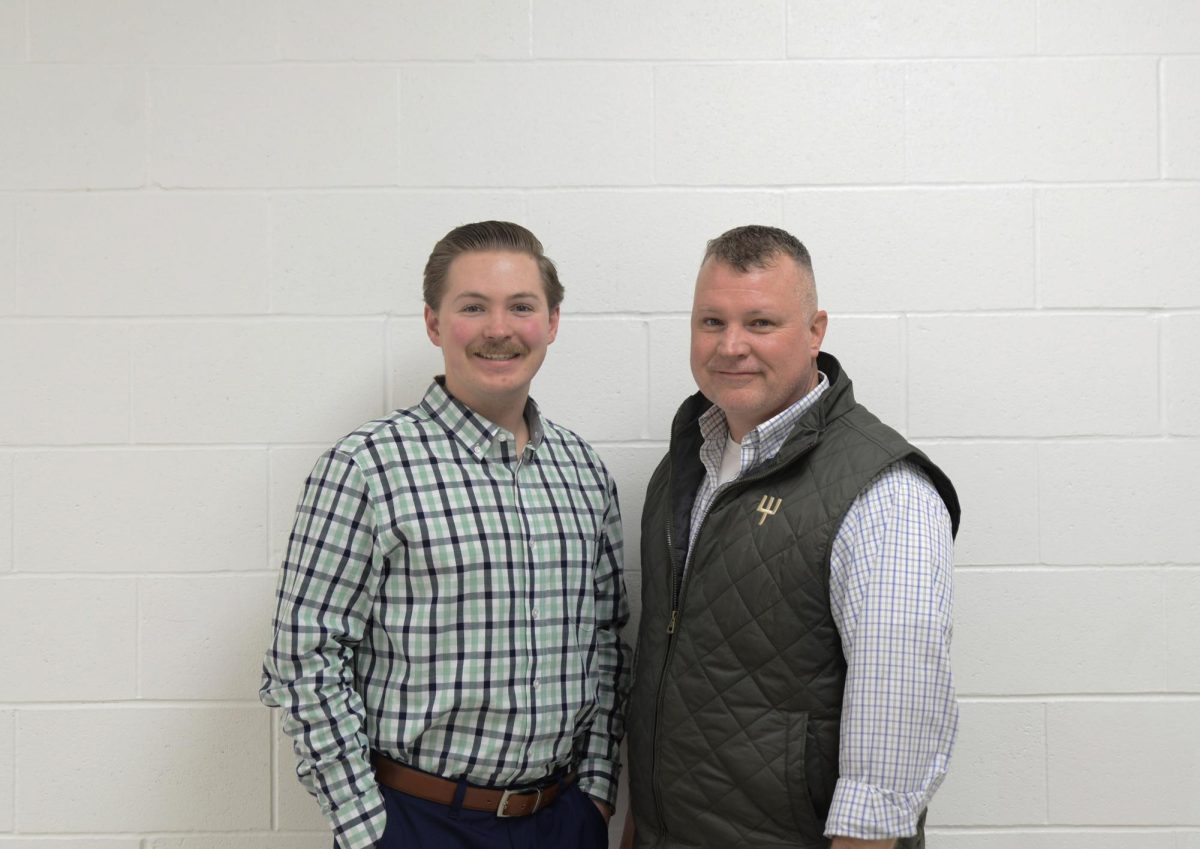
Ethan Smith, a past homeschooled student and current sophomore in college, was raised here in Rolla. While homeschooled, he had many opportunities for sports and social events, just as someone in public school would experience.
“There are homeschool-specific dances. There are sports teams that are more specific to homeschooling. But I also feel like, [in] our community specifically, there were so many homeschoolers in Rolla that people don’t know about. A lot of things that aren’t homeschool-specific are just run by the homeschoolers. Our community theater is primarily homeschoolers,” Smith said, “And now the divide is becoming less apparent because of new laws that were passed that homeschoolers can go in and do extracurriculars in the school. There is starting to become more of a blend as people are starting to realize that and take advantage of that, but not in Rolla because we have so many homeschool-specific programs.”
Nathaniel Hall comes from a large family that is completely homeschooled. His experience defies some of the myths about homeschoolers.
“I think there are a lot of homeschoolers who are very introverted, but I think that is the same for public schoolers…Homeschoolers are good at finding activities to keep them busy that bring in a large community of people. Specifically in Rolla, there’s the theater, which was started by a homeschool family…The sports league, and in St. James, there’s a home school music school that I go to on Mondays,” Hall said.
There aren’t just sports opportunities in the community; the Watson School of Music and the Arts has a homeschool music program, open for students as young as 5 up until graduation at 18.
“It all started with the music school. When my parents were getting their divorce, the guardian ad litem was the Hall’s dad. [My mom] met them, and then started to branch out and look at some of the homeschool things that were going on in the community… As we started making friends there, [the Halls] introduced us to the things like the dances and the theater stuff and the sports, so our mom signed us up for a bunch of those as we expressed interest in them,” Smith said.
This unique introduction to music really shaped Smith’s life in a way that might not have been possible in a public school concert band. Especially in a large band that the Rolla Public Schools has, it’s hard to get one-on-one help and singularity in ensembles.
“I started learning guitar when I was ten, and I took lessons for three years, and then we couldn’t afford it anymore, so we stopped. And then I taught myself piano. When I was fourteen, we started going to the music studio in their home school program. And I did choir for the four years I did that. The second year I started cello, and I did that for three years while I was there, and then the third year, I picked up clarinet and alto sax, and I’m still doing those… I learned to play the ukulele … Then I played the bassoon my senior year,” Smith said.
Being homeschooled can give the freedom and time to pursue hobbies and interests on a much deeper level than might be available in public schools.
“There were definitely other careers that I wanted to do before I decided on music, and I think I would have ended up doing something else if I’d have done public schooling, just because I wouldn’t have had those specific circumstances that pushed me to do this,” Smith said.
Another misconception of homeschoolers is that they aren’t going to be prepared for college, whether academically or socially, and may even have problems getting accepted into colleges due to being homeschooled.
“With all the curriculum I’ve done, I’m pretty certain that I have it all. I’ve done language: I was learning Spanish for a few years, and I’ve done plenty of music, math, science, writing, all that stuff,” Hall said.
Maintaining a good transcript and having a lot of extracurriculars to compete with public school students can be hard, but is very possible.
“I never took an SAT or an ACT, and I didn’t have to take either of them for college because my parents kept such a detailed transcript that they could send into the Missouri Board of Education, and they [the Board] reviewed it and told me that I did everything that was required to pass high school, and they didn’t need any testing for it. So even when I went to college, all they had to do was look at my transcript to see that I got A’s in all of the classes that they needed,” Smith said. “I never had to take a placement test for college either, which isn’t the case for a lot of my friends. Their parents didn’t keep good transcripts, and so when they start college, they do have to take all of the placement tests and those standardized tests.”
Even without the issue of academics, many might worry about the acclimation process. There is a stereotype of unsocialness among homeschooled students, especially when transitioning from homeschooling into college. Smith claims to be unsocialized when he was growing up, but knows his reality is much different than most other homeschoolers, and therefore disagrees with the antisocial stereotype.
“So me being unsocialized was kind of a specific thing. But most of the friends that I made were widely socialized, they had more friends than quite a few of the public schoolers that I know, and their friends weren’t even specific to homeschooling. They had public school friends, and they knew a whole bunch of people just from the amount of activities that they did,” Smith said.
Smith is now in his second year of college and is working towards a doctorate in vocal pedagogy. He had no problems being accepted into college and getting scholarships, and actually found the transition to be easy.
“My dad was pretty much in charge of everything I did, as far as schooling. He ran it pretty much like what I imagined public school would be, where we had to wake up at a certain time, and we had this class at eight and this class at nine, and we had to do all of our work within that time slot and then do our homework after all of those time slots were over. Testing was also super easy, or the transition was super easy because we weren’t allowed to move on after a test unless we got one hundred percent on the test. So I ended up with one hundred percent in all of my math…so having to manage your workload wasn’t a difficult transition at all…I have eighteen credit hours and five ensembles. I have A’s in every class. I work at Beals, and then I work for the school,” Smith said.
There are many pros and cons when it comes to homeschooling or public schooling, but there is a community in either option. Hall is glad he was homeschooled and believes this is the best option his parents could’ve chosen for him.
“I like being at home so that I can also develop, so I can be more raised rather than just educated. With public schools, the teachers aren’t paid to raise you and bring you up to be a good human. They’re paid to educate you. Also, I get to be with my family all day, rather than a bunch of other people who probably don’t all share my views. It’s much easier to have a strong friend group of Christians who share my views on Christianity and other religions and different political opinions. So it’s easier to be a Christian and to be just a person,” Hall said.