

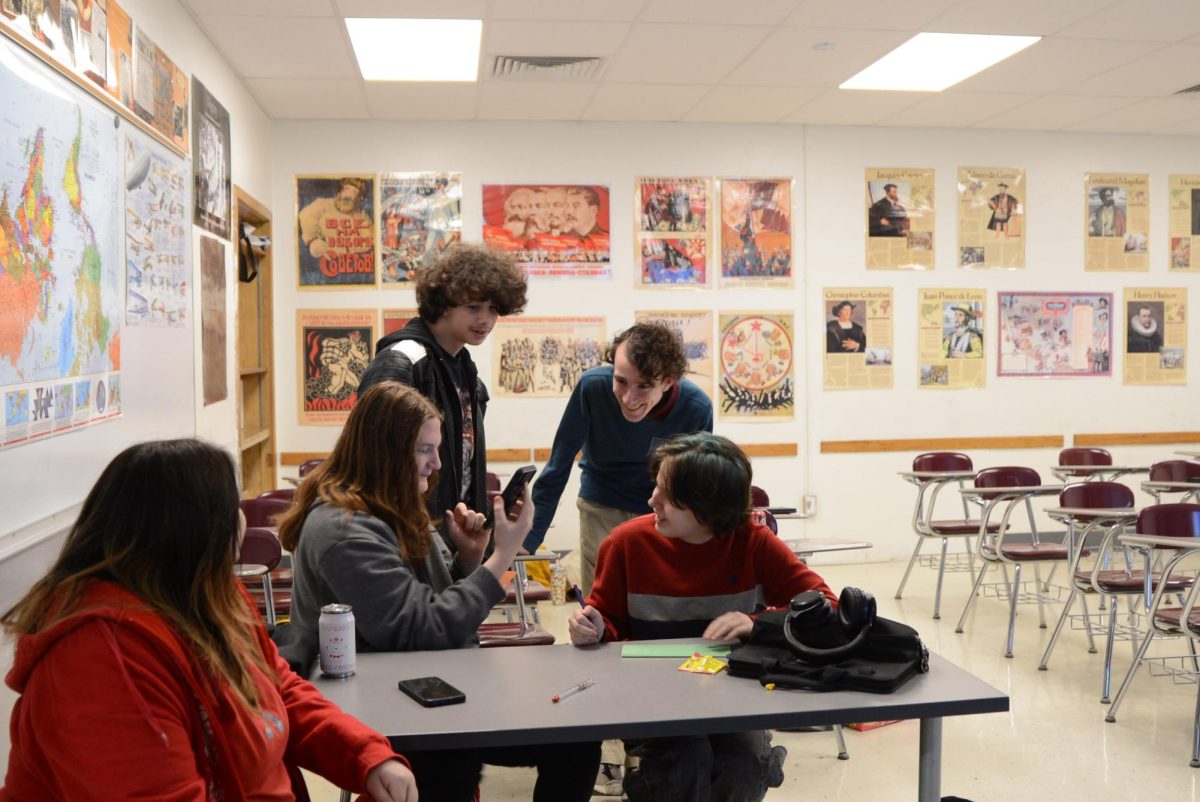
Splashy. Multicolored. Beating-heart Pride. With its vibrant, ubiquitous posters fluttering bright from the hallway walls, Rolla High School’s Unity Club has been expanding more than ever before.
But what does this long-standing organization do, and who’s involved in it?
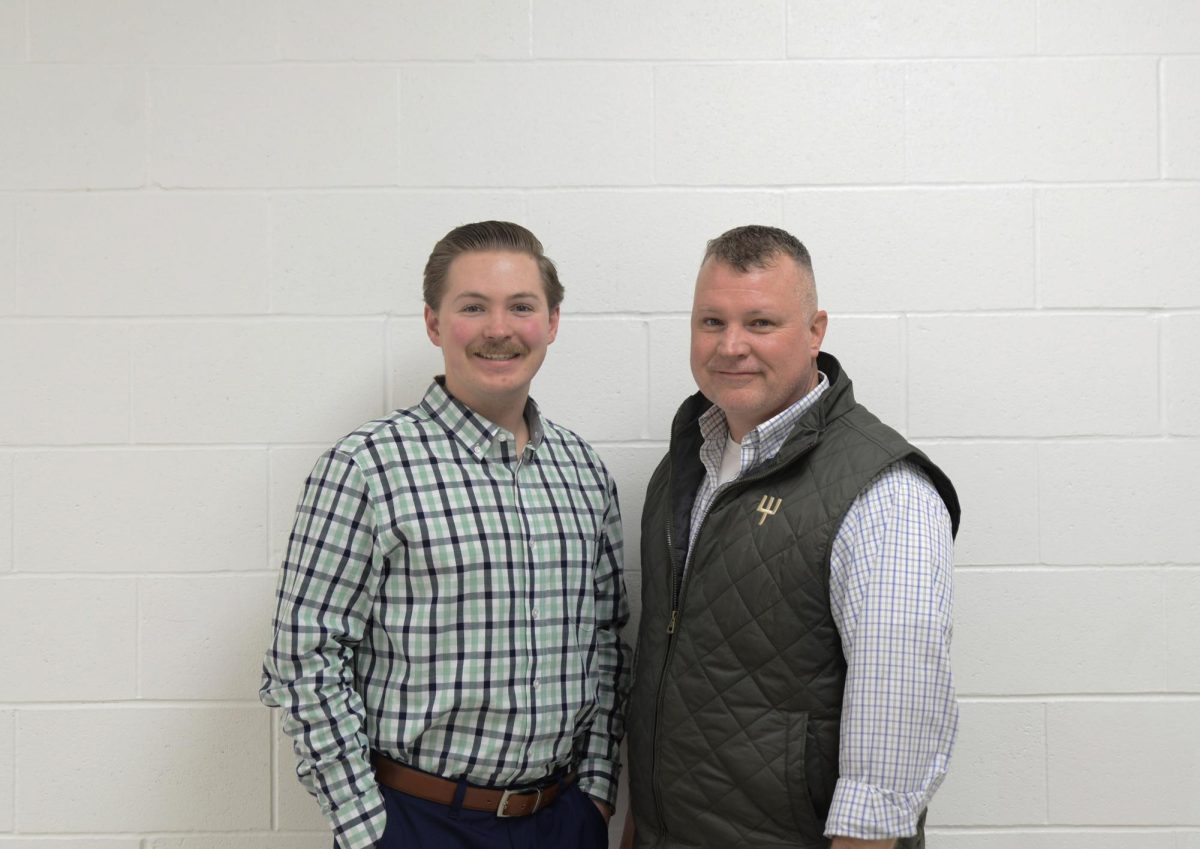
Senior Robert Longley is president of Unity Club, which has always been student-run.
“Basically, I fill in the role that a teacher would in another club. I plan the meetings and organize the students and generally structure the club. I joined the club my sophomore year…When I joined, it only had three people. I became president last year because the previous president graduated. Now, there’s enough members to fill a classroom full of people,” Longley said.
RHS history teacher Aaron Loker has sponsored the club since its founding.
“It’s mostly a social gathering. Sometimes we do things like playing board games or crafts. I don’t want to step on Ashton Stoney’s [karaoke] club here,” Loker joked, “but sometimes we do karaoke. It really just varies. And it’s not a super top-down club. It’s really just a free-flowing thing where everybody hangs out and has a good time.”
An RHS student started the club—which meets on Thursdays after school—a decade ago.
“It was an idea brought to me by a student—a club set up as a safe space for LGBTQ+ students as well as their allies. I don’t think I even had that student in class; I think they just found out about me and asked if I was interested in sponsoring that club. And I thought it was a good idea, and we didn’t have anything like it. We thought it would be nice to have something set up like that where students could go and hang out and just meet other people,” Loker said.
Longley sees Unity Club as a social space where members can simply have fun being themselves.
“To put it succinctly, it’s the weird-kid club. A lot of the journey of being president has been refining the club’s identity, but this is kind of what we settled on. People go there to chit-chat, talk about their interests, whatever. We do game nights pretty frequently. We just had a watch party of someone’s favorite show,” Longley said. “I actually think it’s surprising how many people that people can just look over and miss, even in a small town like ours. Our point is creating a safe space, a space where people can chill. A lot of the people show up because it’s not weird to be weird there.”
Though the club has encountered moments of contention and difficulty, its members maintain a peaceful stance and find solace in their internal unity.
“The first year that our posters were torn down, we just ended up silently hanging up more. Eventually, people chilled out, and the posters stayed up for the usual length of time that posters stay up. But, generally, the mentality is to coexist. This is our own space; we’re not trying to provoke anyone outside of it. We’re just gonna exist here while we can,” Longley said. “It’s an interconnectedness thing. The whole premise of the club is finding people to talk to, and I think that’s a big support when stuff like that happens. Sure, they’re tearing down the posters, but we still found each other. They can’t undo that.”
Longley hopes to solidify the club’s sense of self before he graduates and passes the torch to the next student leader.
“I really want to cement the identity of the club. I want to come up with more rigidity in the methodology, because whoever comes after me should not have to go through the phase that I had to go through figuring that out. I want them to be able to do more with the foundation already laid,” Longley said.
Longley advises hopeful student leaders to understand their own mission before trying to expand outward like he did.
“It starts with finding people. It starts with finding a message. You gotta figure out what your goal is in more decisive terms for people because people aren’t going to resonate with something big. There’s a reason why those generic mottos on the posters, like, ‘You can do it!’, don’t work very well. You’ve got to have meaning behind it, intent behind it. Find your purpose before you start trying to get people to hop on board,” Longley said.