

The internet and social media is taking the world by storm the more advanced it gets. As the world slowly shifts, it may seem like the history books feel much more outdated after getting new information from various sources. A normal history class often still uses these same history books, ones that haven’t been updated for years about ancient history all the way up through the 2000’s. The leading question now is do we even truly need history books when we have the internet and social media?
Rolla High School History teacher Travis Curtis has a clear love for everything history. For Curtis, in-depth information is just a search away.
“You can look something up on the internet, and it’s like looking through a keyhole. You see you can look up that specific piece of information,” Curtis said.
Curtis followed up with a similar approach to how he views books, using a book about President Lyndon B. Johnson to provide further context about a topic.
“So you could look up LBJ’s role in the Civil Rights Movement, and you could look up some specific aspect of that. But if you read the book, and you get the bigger picture, you can understand that his family relationships, the way he was raised, and where he was raised, all of that has an impact on how he dealt with things as an adult and as a President,” Curtis said.
A recent student survey asked RHS students if they believe AI is spreading false historical information, and the results revealed almost 70% of students agreed that it is spreading false information. Curtis believes that AI isn’t all bad.
“It has a place. Given instant feedback chatting with an AI bot, even though it’s a bot, they seem to be pretty accurate, and so I think having a class of 25 students can have more engaged experiences with each one of them doing the work and getting instant feedback and moving at their own pace, rather than trying to get the class to move together,” Curtis said.
Curtis acknowledges the benefits to diverse learning modes as well.
“I mean, again, I guess there’s benefits to students taking classes online. They can do it at their own pace when they want to do it. But there’s benefits to having a normal, traditional class too. Where you can have discussion and inputs and viewpoints from several different people,” Curtis said.
In RHS classes like Math, in History, and English, AI can be used. RHS freshman Meghan Picker has been in the Rolla School district her whole life. Picker has always had a passion for being the best she can be in school and in her hobbies, and she prefers more traditional learning methods.
“[Learning with paper] makes more sense, like in my head, and also with AI being put to use. I don’t want to be taught by AI,” Picker said.
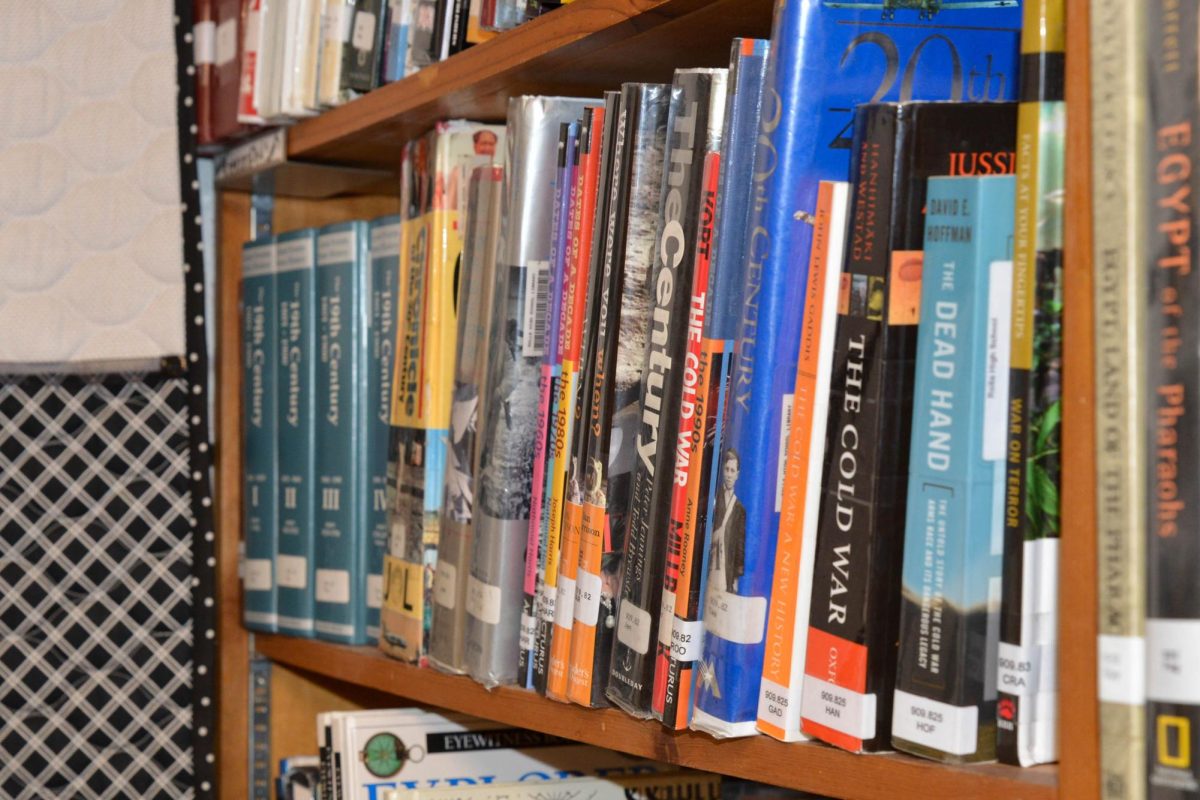
History books are prewritten. In other words, if information needs to be updated you cannot just edit every single already-sold copy. Some may say that this makes history books obsolete.
“They [history books] usually start at around the same point in time, but then as it gets into [recent] events, it stops at 2000 or something earlier but doesn’t cover other things,” Picker said.
Talk of the Civil Rights Movements, or even prehistoric conspiracy theories have been resurfacing due to social media. Uneducated sources have twisted information for hundreds of years, and this trend is even more prevalent with social media. Picker believes that the internet is twisting out history one way or another.
“People always make up or find new explanations for things when some of them aren’t even logical, and then others could be but are just false. Then people obviously choose to believe them. But I do think that it does twist facts a bit.” Picker said.
With things like Gemini– Google’s AI system, searching for information has “never been easier.” The answers to any searches appear at the top of the page with an AI overview of the topic. This makes the use of informational books (encyclopedias, dictionaries, and anything historical) marginally useless to some.
“It is easier to look something up [online]. I think we can all agree with that, but I think it’s more factual to read from the book rather than just searching it up,” Picker said.
Some may say the world is overrun with AI. Some people embrace the change and some people hate it for their own reasons. Either way, about 68% of the students interviewed all agreed that AI is spreading false information, and Picker agrees.
“Yeah, definitely. It’s kind of just corrupting. I feel like the education system in general, teachers and students, are relying on it more for basic and simple tasks,” Picker said.