

Music can be anything. It can be understated, soft, like a spring breeze flowing through the branches of a tree. It can be bold, energetic, neon colors flashing across a bright screen. Music can be an act of resistance, a declaration of principles and a plea for change. Music can be an act, performing something that it is not.
This performance is greedy. It reaches into the cultural zeitgeist and morphs into what an audience wants without doing the work to actually become that concept. This projection is evident in the case of “pop feminism.”
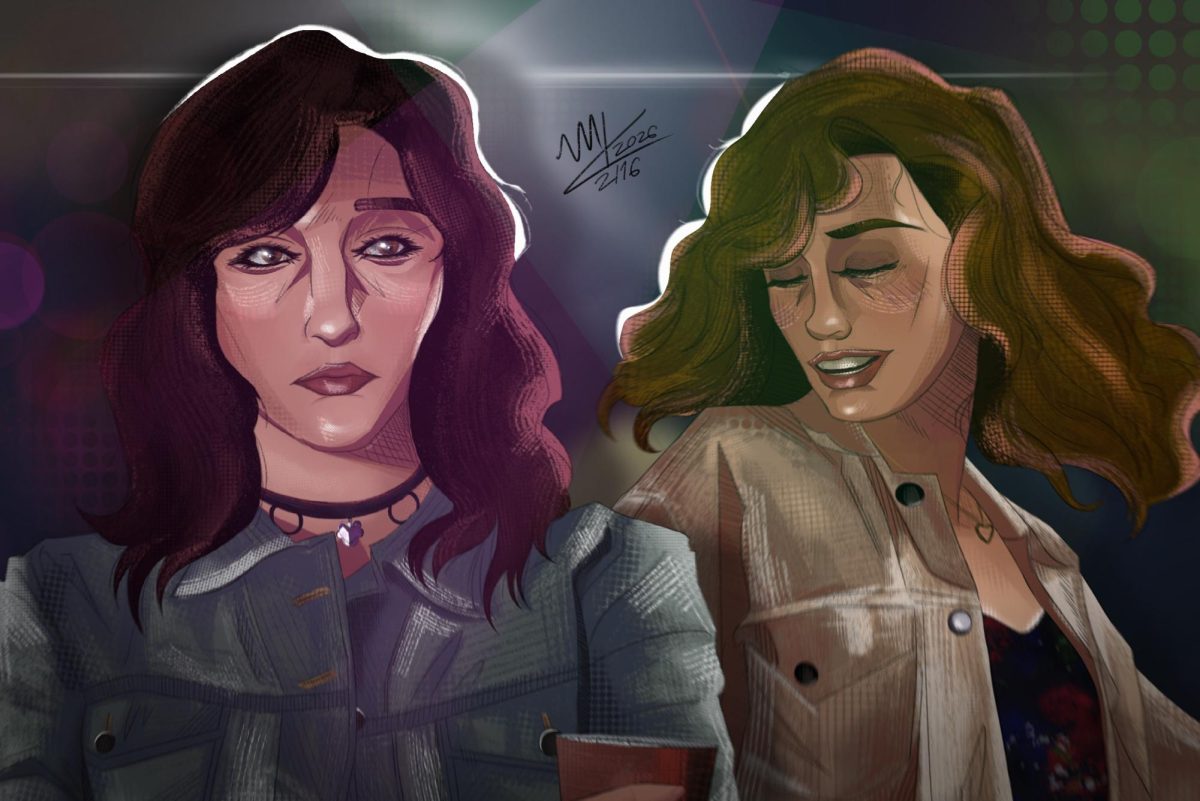
Pop feminism is characterized as a shallow portrayal of basic feminist attitudes within popular music. It can be presented as vague references to the movement without any real context or commentary, a lack of ideological integrity, and harmful stances disguised as “girl-power.” While stars like Sabrina Carpenter, Taylor Swift, and Lana Del Rey may not always make direct references to feminism in their work, the mindsets and ideals that they promote can greatly effect fans’ concepts of feminine archetypes. In her video on Sabrina Carpenter’s role in pop feminism, social commentator Lani, from the channel Lani’s Lens, argued that artists and their fans should take more accountability when it comes to messaging.
“There’s been this growing sentiment online that we should cut pop stars some slack because ‘They’re just people trying their best,’ but this misses the point entirely. Sabrina Carpenter and Chappell Roan aren’t your coworkers who are struggling to make ends meet. They have massive platforms and resources, and they were very intentional about getting to that point…When we shield them from accountability by saying ‘They’re just like us,’ we’re actually projecting our own helplessness onto people who actually have the power to create change…Now, does that mean that Sabrina or any other pop star needs to become our new feminist thought leaders? Absolutely not. But I think asking them to be more conscious about the message they’re spreading is completely reasonable,” Lani said.
The mainstream pop industry has been condemned for its consistent presentation of white feminism, a form of the movement that ignores the specific struggles of women of color and often lacks integrity. Critics also claim that artists use feminism as a way to garner support from fans, instead of a real desire for equality. The exploitation of female artists within the industry forms a large argument against this sect of feminism. Sensuality within music is often labelled as an autonomous action, a way to reclaim women’s bodies that stems from second-wave feminism. But these performances of sensuality most often come out as false and exploitative, playing into the patriarchal power structure they are said to fight against.
According to a paper from a task force on the sexualization of popular music, young consumers’ viewing of “sexually objectifying music content” greatly influenced their own self-concepts. The participants in a 2009 study originally published in the Journal of Applied Social Psychology compared themselves to and attempted to mimic those who appeared in exploitative music videos.
“[The researchers] found that participants surveyed who reported greater amounts of music television exposure also reported higher amounts of self-objectification. This self-objectification was then found to negatively influence participants’ body esteem, dieting patterns, and levels of anxiety,” the task force said.
When young viewers see a star they look up to, they often attempt to assimilate into the worldview that these singers project. If artists are creating an environment of manipulation and archaic identities, then the generation of women who grew up idolizing them will see their environment in the same way.
While these celebrities do have some autonomy over their images and positions, a lot of pop feminism’s effects lie more in consumers’ perceptions of these women than their actual platforms. It’s important to remember that the pop and music production industries are male-dominated and still viewed through the biased lens that brings the actions of women into sharper focus.
“In the current generation where technology and communication can occur in an instant, female artists are expected to adjust to a multi-faceted industry that, at many times, can seem paradoxical in nature. Many female artists are forced to find the right balance between outgoing and timid when portraying their public personas. Attitudes in pop culture dictate that they can’t be too sexy, too modest, too masculine, too feminine, too submissive, too dominant, too feminist, too apathetic. These unfeasible expectations prohibit many female artists from expressing themselves authentically,” said Audrey Lee and Brian Oh in the Columbia Undergraduate Research Journal.
As consumers, we cannot rely on our favorite performers sharing our ideals or having the constitutions to back them up. Stay vigilant; be aware of the messaging within the music you listen to, and don’t force it to be anything that it is not. Engage with artists that apply and showcase honest equality, artists that truly care for their cause.